
Як працювати з темою
У фаховому історичному тексті відстежуйте хронологію та причинно-наслідкові зв’язки: following, after, eventually, compared with. Пасивні конструкції was invented, was designed, was completed зосереджують увагу на пристрої та його призначенні. Не плутайте invention — винахід та inventor — винахідник. У цьому виданні виправлено згадку про Colossus: його розробив Tommy Flowers для роботи з шифром Lorenz; це не машина Тюрінга для Enigma. Джерело уточнення: The National Museum of Computing.
Мета: Розуміти історичний виклад; описувати винаходи та послідовність подій англійською.
Читайте текст частинами. Спочатку визначте головну думку, потім перевірте значення термінів і сталих сполук у контексті. Пояснення подано українською; читання, приклади й відповіді на англомовні запитання залишаються англійською.
Навчальний матеріал та вихідні вправи
The History of Computing
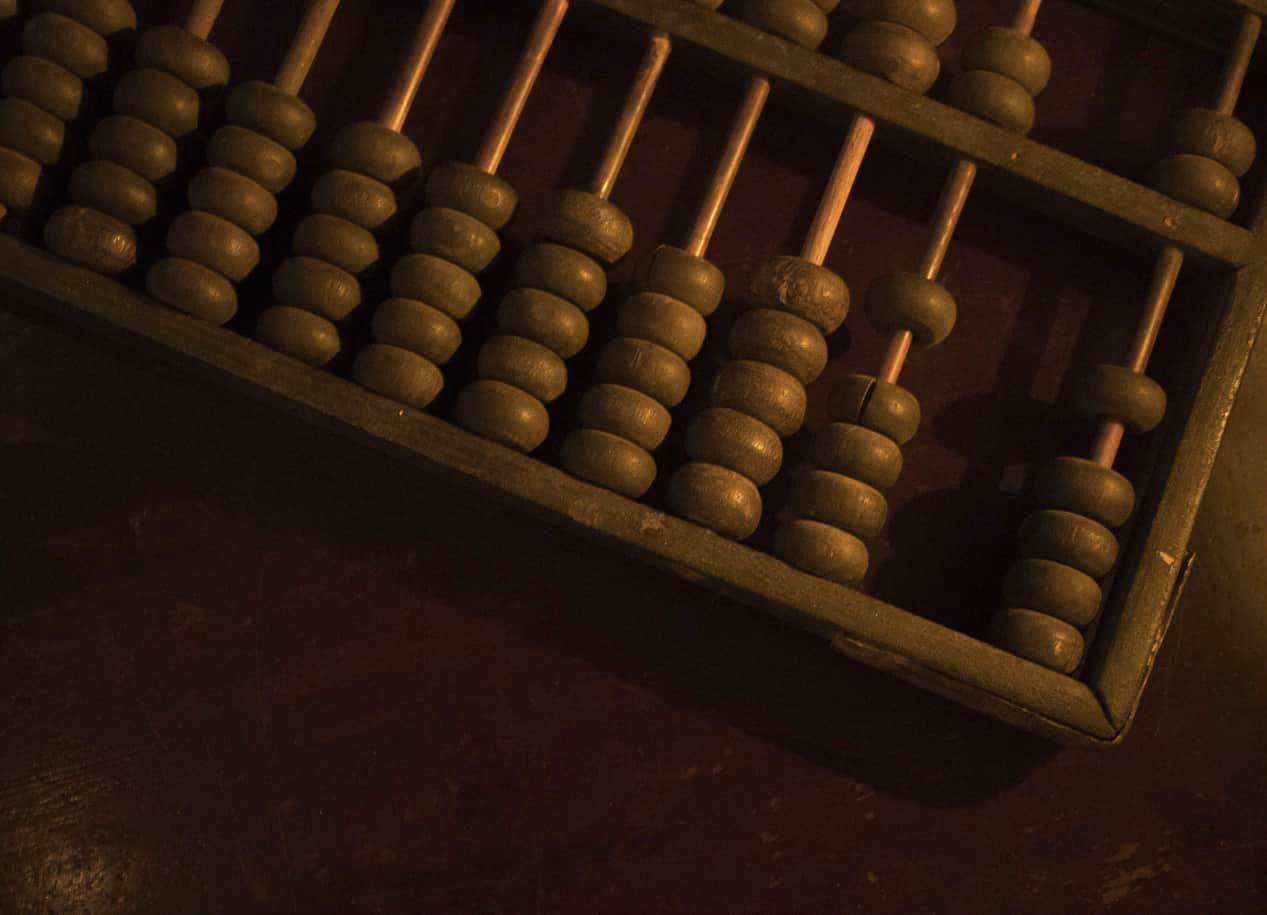
Although computer science was established as a science only in the 1940s, interest in computing and computation has a very long history. Early Babylonians invented the abacus, a simple counting device in order to keep a record of their goods. It consisted of a counting table, which was a specially marked flat surface where small stones could serve as markers. Alternatively, it comprised beads strung on rods that were in turn mounted in a rectangular frame.
The positions of the beads represented stored values and the output could then be read off. In the early 17th century, Napier’s bones was a mechanism created to simplify the operations of multiplication and division by reducing them to simple tasks of addition and subtraction. A series of numbers were written on narrow strips of bone.
Figure 1.1 The abacus
Description
Абак: намистини (beads) розміщені на стрижнях (rods) у рамці (frame). Рисунок допомагає назвати складові англійською.
The need for a computing device that would serve commercial purposes precipitated the development of one of the first mechanical calculators. In the early 17th century, the Pascaline was invented by Blaise Pascal in France, and it was a hand-powered adding machine which could calculate by using up to eight figures. The machine was designed to add and subtract two numbers directly and to perform multiplication and division through repeated addition and subtraction. It utilized gears and cogs to transfer the results from one wheel to another.
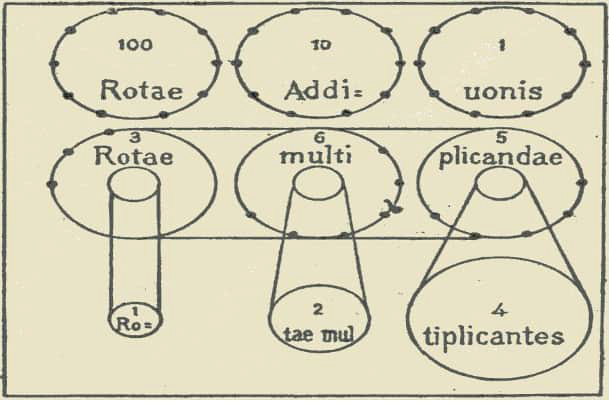
Figure 1.2 Leibniz’ drawing showing 365 multiplied by 124 (Source)
Description
Історичний рисунок із джерела про Лейбніца. Використовуйте для обговорення історичного контексту; зображення не є сучасною реконструкцією механізму.
After Pascal’s death, Gottfried Leibniz, a German philosopher in the history of mathematics and the history of philosophy, started working on his own mechanical calculator. Failing to improve the functionality of the Pascaline, he devised his own competing design. The step reckoner was meant to perform additions, subtractions, and multiplications automatically, and division by operator control. Leibniz struggled for forty years to perfect his design.
In 1801, Joseph-Marie Jacquard created a special type of weaving machine, which operated on a set of cards with holes in them. Instead of using traditional hand-weaving techniques, Jacquard’s Loom could produce fabrics with complex and sophisticated patterns more quickly and more efficiently. The loom gave birth to the concept of punched cards. Multiple rows of holes were punched on each card, representing the rows of the fabric design. Sequences of any length could be built, without being limited by the size of a card. The use of replaceable cards suggested a change in the input, which would subsequently affect the implemented process. Jacquard’s Loom can be considered as one of the first programmable devices.
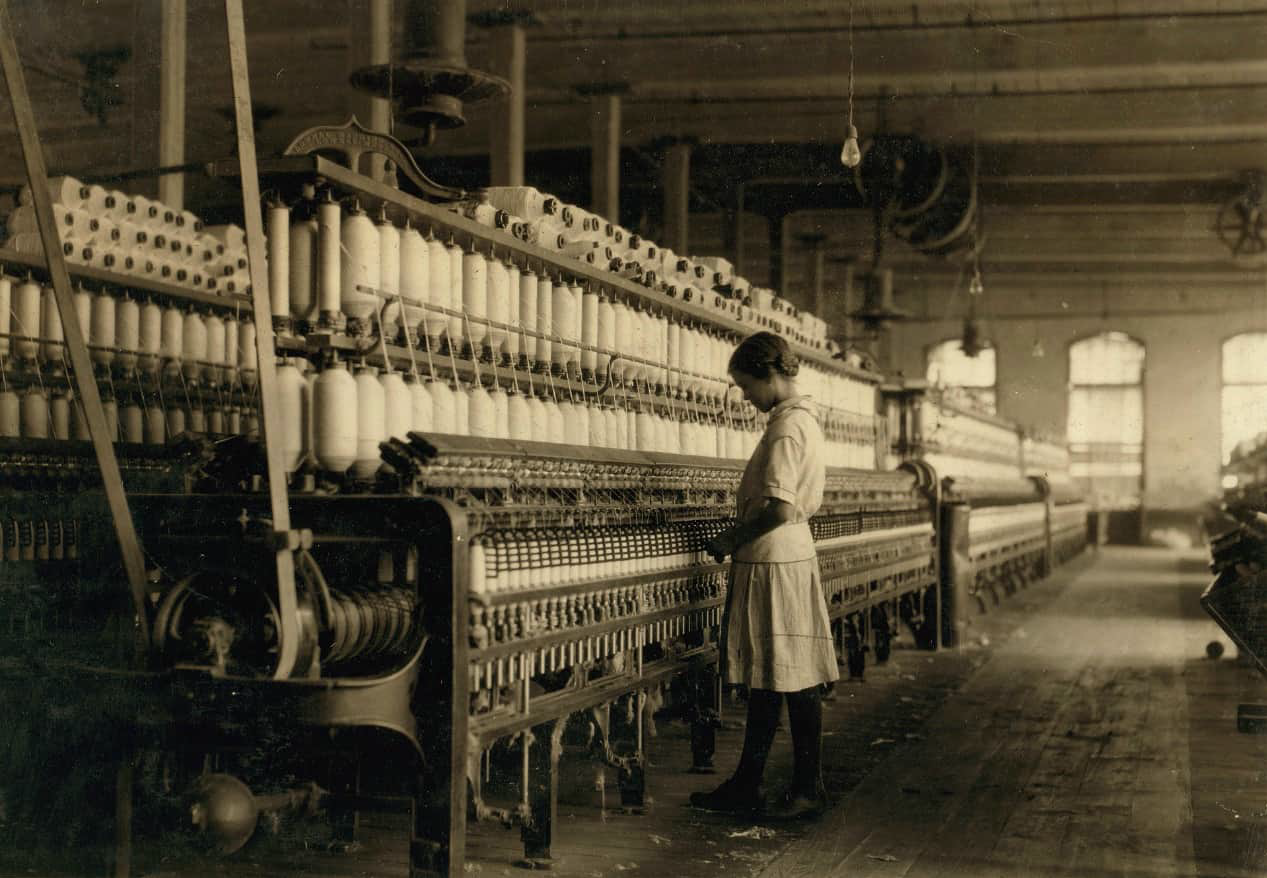
Figure 1.3 Human operator
Description
Оператор біля текстильної машини. Саме фото не доводить, що це верстат Жаккара; для пояснення використовуйте обережний опис textile machinery.
In 1822, Charles Babbage, an English mathematician and philosopher, started work on the Difference Engine, a machine intended to automatically calculate mathematical tables. The project never came through since the engineers of the time could not manufacture a device that would be accurate enough. However, Babbage has been credited as the inventor of the first mechanical computer, which eventually led to more complex electronic devices.
Babbage’s Analytical Engine was intended to use punched cards to input programs to a machine and to be powered by steam. Even though the Analytical Engine was never built, it actually came along with programs written for it. Augusta Ada Byron, the Countess of Lovelace, was a mathematician and fervent logician who worked with Charles Babbage on the Analytical Engine. She sought to examine and reason on methods for computing. In her published analysis of the Analytical Engine, Lovelace outlined the fundamentals of computer programming. She is currently recognized as the world’s first programmer, and a computer language called ADA was named after her by the U.S. Department of Defense in honor of her contribution.
A recognized beneficiary of Jacquard’s idea was Herman Hollerith (1860–1929), who applied the concept of representing information as holes in paper cards to speed up the tabulation process in the 1890 U.S. census. The Tabulating Machine used a combination of punched cards and mechanical gears and was very successful in reducing data processing time significantly. Hollerith went on to develop more complex machines and to start his own company, which leased machines to governments and commercial organizations worldwide.
During the 1940s, a decade of dramatic events in world history, the first electronic computers were built. Five computers gained great renown during these years. The first special-purpose computer that encoded information electrically was invented by John V. Atanasoff and his assistant Clifford Berry in 1939. The Atanasoff–Berry Computer (ABC) used only 300 vacuum tubes and was specifically designed to solve a system of linear equations.
At the same time, a German mathematician named Konrad Zuse designed a general-purpose machine known as the Z1. The Z1 was the first computer in the world to use Boolean logic and floating-point numbers, but it was quite unreliable in its operation. In the 1930s, the U.S. Navy and IBM sponsored a project at Harvard University under the direction of Howard Aiken to build a large computer named Mark I. This computer used both electrical and mechanical components.
Figure 1.4 Alan Turing
In England, Tommy Flowers designed and built Colossus to help decipher messages encrypted with the German Lorenz cipher. Finally, the first general-purpose, totally electronic computer was created by John Mauchly and J. Presper Eckert and was called ENIAC (Electronic Numerical Integrator Analyzer and Calculator). It was completed in 1946. It used 18,000 vacuum tubes, was 100 feet long by 10 feet high, and weighed 30 tons.
In 1951, the Universal Automatic Computer (UNIVAC) was delivered by Remington Rand Corporation. UNIVAC was the fastest computer of the time and the first American commercial computer. Its calculations were performed by using vacuum tubes and reading from magnetic tapes.
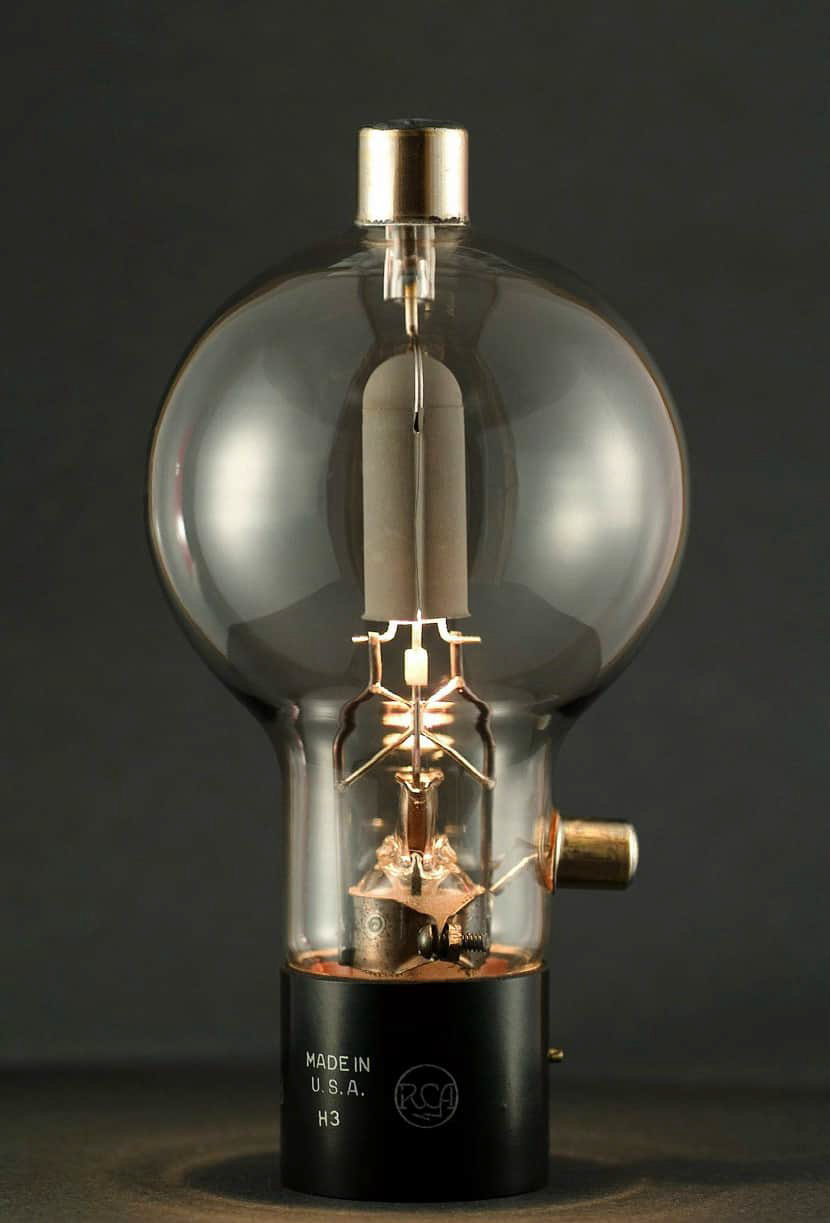
Figure 1.5 Vacuum tube
Description
Електронна лампа у скляній оболонці. Зіставте англійський термін vacuum tube з предметом та поясніть її історичну роль за текстом.
Vacuum tubes offered a significant advantage over mechanical computers. They were devices that controlled electric current flow in a vacuum between electrodes to which electric tension had been applied. These devices became a significant feature of electronic circuits for the first half of the twentieth century. They contributed to the development of radio, television, radar, sound reproduction, analogue computers, and early digital computers. Ultimately, this technology was limited by its high cost, large size, and substantial energy consumption.
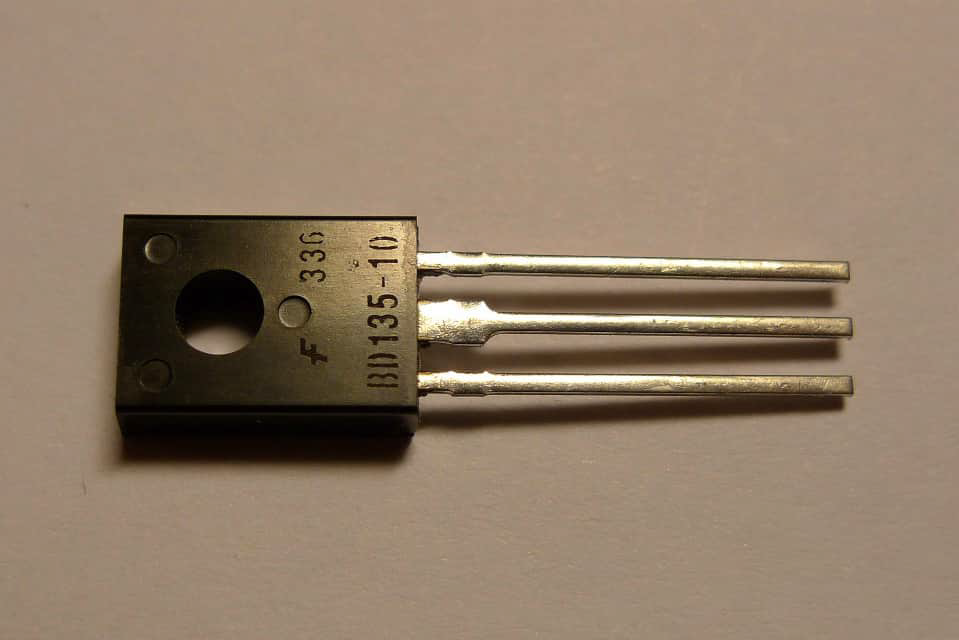
The development of the transistor by the American Telephone and Telegraph Corporation in 1947 provided a solution to these limitations. Transistors are semiconductor devices used to amplify or switch electronic signals. They are made of semiconductor material and contain at least three terminals for connection to an external circuit.
Figure 1.6 Transistor
Description
Транзистор із трьома виводами. Назвіть terminals англійською і порівняйте предмет із vacuum tube, використовуючи текст юніта.
Transistors have become ubiquitous in modern electronic devices, since they are found embedded in integrated circuits. Most of them are made from silicon. Compared with vacuum tubes, transistors are generally smaller and require less power to operate. The inventors—American physicists John Bardeen, Walter Brattain, and William Shockley—shared the 1956 Nobel Prize in Physics for their achievement and their contribution to revolutionizing the field of electronics.
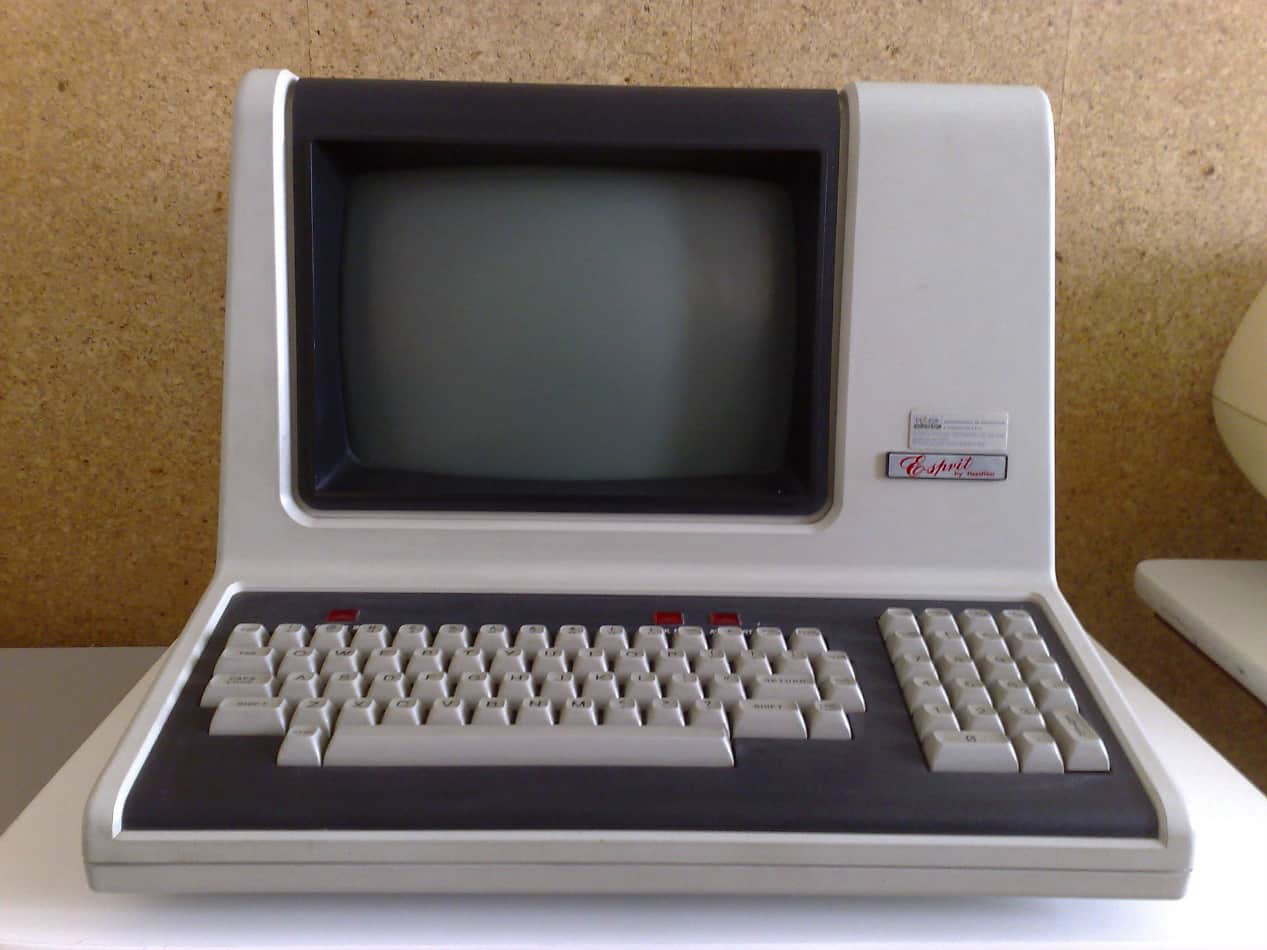
Figure 1.7 Personal computer
Description
Історичний персональний комп’ютер із вихідного матеріалу. Називайте видимі компоненти англійською; точну модель і дату за зовнішністю не визначайте.
The emergence of the personal computer, or PC, transformed the computing landscape forever. It became possible for individuals to purchase these machines and use them at home. Today, small hand-held computers have more computing power than the room-size machines of the 1940s and can exchange information quickly via global communication systems.
Human society is faced with the challenge of seeking meaning in new places and moving forward through new patterns of action. What the future holds is largely a matter of interpretation.
Reading Comprehension
Task 1 Answer the questions based on the passage above.
1 When did computer science emerge as a scientific field?
………
………
2 What is considered to be the first counting device?
………
………
3 Circle the two different methods by which values are input to
the abacus.
a stones
b gears
c beads
d bones
4 How did Napier’s bones get their name?
………
………
5 What is the first mechanical calculator and what need did it
serve?
………
………
6 Match the inventions with their underlying mechanism.
-
Pascaline …
-
Jacquard’s Loom …
-
The Analytical Engine …
-
Tabulating Machine …
-
UNIVAC …
a. punched cards
b. punched cards and gears
c. vacuum tubes and magnetic tapes
d. gears and cogs
e. punched cards and steam
7 What is the importance of punched cards?
………
………
8 What is the legacy that the Analytical Engine has left?
………
………
9 Match the computers with their creators.
-
ABC …
-
Z1 …
-
Mark 1 …
-
Colossus …
-
ENIAC …
a. Konrad Zuse
b. John Mauchly and J. Presper Eckert
c. John V. Atanasoff and Clifford Berry
d. Tommy Flowers
e. Howard Aiken
10 What are the advantages of transistors over vacuum tubes?
………
………
Task 2 Match the words with similar meanings.
-
configure
-
machine
-
insight
-
develop
-
stage
-
record
-
complex
-
architecture
-
convert
-
work out
a. design
b. change
c. create
d. set up
e. understanding
f. engine
g. calculate
h. store
i. sophisticated
j. step
Task 3 Find pairs of antonyms.
-
academic
-
expand
-
analogue
-
benevolent
-
encode
-
manual
-
obsolete
-
portable
-
encrypt
a. fixed
b. malicious
c. automatic
d. commercial
e. current
f. decrypt
g. condense
h. digital
i. decode
Task 4. Fill in the gaps in the table of common academic terms.
| ADJECTIVE | NOUN | VERB |
|---|---|---|
| achievable | achieve | |
| acquired | acquire | |
| analytical | analyze | |
| contributory | contribute | |
| creative | create | |
| definitive / defining | define | |
| derived | derive | |
| distributive | distribute | |
| emphatic | emphasize | |
| evaluative | evaluate | |
| hypothetical | hypothesize | |
| indicative | indicate | |
| interpretative / interpretive | interpret | |
| invested | invest | |
| predictive | predict | |
| reliable | rely | |
| responsive | respond | |
| significant | signify | |
| synthetic | synthesize | |
| variable | vary |
Task 5. Choose the most suitable word ending for examples a-g.
a Compuart Corp. announced that it has acqui…… private Web
development firm Technoware Inc. In a prepared statement,
Compuart said that this acqui…… advances its e-commerce
strategy.
b Predi…… modeling is the process of using known results to
create, process and validate a model that can be used to forecast
future outcomes.
c In technology, respo…… time is the time a system takes to react
to a given input.
d A contribut…… community can be used as a platform to deploy
services, as an alternative to large data centers.
e Interpre…… research often involves using qualitative methods
from which to understand the data collected and analy…… during
the research process.
f Abstraction is seen by most computing scientists as a defin……
characteristic of computing science.
g Furthermore, we anticipate general abstractive skills to be an
indicat…… of success for learning computer science.
Task 6 Complete each sentence with a suitable word from the table above.
1 The experimental results were confusing: each researcher had
their own ……
2 The word ‘algebra’ is …… from Arabic.
3 They received the Nobel Prize for their …… in developing a new
vaccine.
4 Three …… need to be considered when forecasting an economic
upturn.
5 A well-structured questionnaire was …… among library
professionals in engineering colleges to …… the library automation
software.
6 …… methods in Computer Science include hardness of
approximation, constraint satisfaction problems, learning theory,
and circuit complexity.
Task 7 Study the following list of academic adjectives which are
best understood as opposites. Then complete the sentences
below with suitable adjectives from the list.
| ADJECTIVE | OPPOSITE |
|---|---|
| absolute | relative |
| abstract | concrete |
| logical | illogical |
| metaphorical | literal |
| precise | vague / approximate / rough |
| rational | irrational |
| relevant | irrelevant |
| subjective | objective |
| theoretical | practical / empirical / pragmatic |
a Computing scientists generally agree that …… thinking is a
crucial component for practicing computer science.
b The teacher complained that the quotes were …… to the title.
c His …… approach led him to ignore some inconvenient facts.
d …… examples are needed to make the argument clear.
e They approached the task in a …… way by first analyzing the
title.
f The students preferred examining case studies to …… discussion.
Візуальні пояснення
Figure 1.4 — декоративний скульптурний портрет не перенесено; історичні відомості про Тюрінга збережені в тексті.
Історичні ілюстрації прикріплено біля відповідних абзаців. На рисунках: abacus має beads на rods у frame; vacuum tube — електронна лампа; transistor у вихідному фото має три виводи. Підписи Figure 1.1–1.7 у тексті позначають місця вихідних ілюстрацій; фото прикріплені до відповідних ілюстрацій.
Джерело
Матеріал викладача: Hard_skills\UNIT_1.docx. Навчальні матеріали курсу Astra. Редакторські пояснення українською та перетворення схематичних ілюстрацій додано за погодженим планом.